Billing is an important part of running a car or bike dealership. Every transaction requires accurate details, proper documentation, and organised payment records. As sales increase, managing invoices through registers and spreadsheets can become difficult, especially when dealers need to retrieve older records or verify transaction information.
Digital invoicing offers a more organised way to manage these activities. Understanding the billing process, avoiding common mistakes, and maintaining consistent records can help dealerships handle transactions more efficiently.
What Is Dealership Billing and Why Does It Matter?
Car and bike dealership billing involves preparing invoices, recording vehicle transactions, and maintaining payment information. These records help dealers document sales, communicate transaction details to customers, and review business activities.
Unlike ordinary retail transactions, vehicle sales may involve vehicle-specific information, registration-related documentation, additional charges, and applicable taxes. Maintaining consistent car billing records helps dealers retrieve transaction details when needed and supports organised business administration.
What Information Should a Vehicle Sales Invoice Include?
A vehicle sales invoice should clearly document the transaction and the parties involved. The exact requirements depend on the transaction type and applicable regulations.
Commonly relevant details include:
- Invoice details: Invoice number, date, and seller information.
- Customer information: Buyer name and other required details.
- Vehicle details: Make, model, and relevant vehicle identification information.
- Transaction amount: Agreed selling price, applicable charges, discounts, and taxes.
- Payment information: Amount received, payment method, and outstanding balance, where applicable.
- Supporting documentation: References to relevant transaction documents, where appropriate.
Dealers should verify current tax and invoicing requirements with a qualified professional rather than assuming that one invoice format suits every transaction.
Common Billing Challenges Faced by Dealers
Car and bike dealerships can encounter several difficulties when billing processes rely heavily on manual recordkeeping.
Scattered invoices: Paper documents and separate spreadsheets can make older invoices difficult to locate.
Inconsistent transaction details: Information entered differently across records can create confusion when reviewing a sale.
Payment tracking difficulties: Dealers may struggle to identify outstanding amounts when payment records are not updated consistently.
Repetitive administrative work: Preparing invoices and maintaining separate transaction records can consume valuable time.
Establishing a consistent billing procedure and keeping records organised can help address these challenges.
Manual Billing vs Digital Invoicing
Manual billing can work for dealerships handling a small number of transactions. However, maintaining paper records becomes more demanding as sales volumes grow.
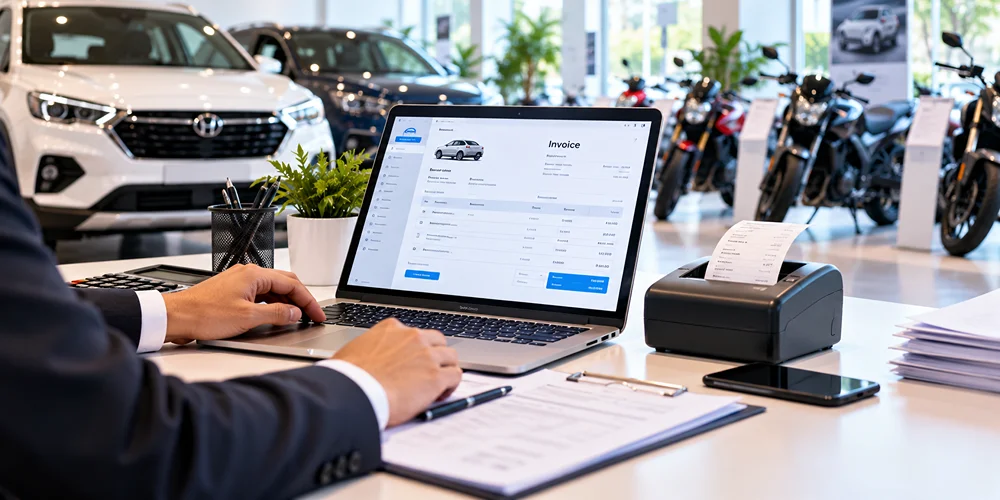
Digital invoicing helps dealers create, store, search, and retrieve invoices electronically. Depending on the system, it can also help organise payment records and connect transaction information with other dealership records.
Digital tools do not automatically guarantee accuracy. Dealers still need to verify the information entered, follow appropriate procedures, and maintain reliable records.
Common Billing Mistakes Car and Bike Dealers Should Avoid
Small mistakes can create unnecessary confusion during vehicle transactions. Dealers can reduce these risks by following a few practical checks.
- Incorrect vehicle details: Verify the make, model, and relevant identifying information before finalising the invoice.
- Incomplete customer information: Check buyer details against the information required for the transaction.
- Unclear payment status: Record payments promptly and distinguish amounts received from outstanding balances.
- Missing invoice records: Store invoices systematically so authorised staff can retrieve them when needed.
- Inconsistent invoice numbering: Follow a consistent numbering process to simplify identification and recordkeeping.
- Delayed invoice preparation: Establish a routine for preparing, reviewing, and issuing invoices at the appropriate stage of the transaction.
A final review before issuing an invoice can help identify missing information and reduce avoidable corrections.
How to Create an Efficient Dealership Billing Process
A reliable billing workflow does not need to be complicated. Dealers can improve consistency by following these steps:
- Verify transaction details: Confirm customer information, vehicle details, and the agreed selling price.
- Prepare the invoice: Include the required transaction information and applicable charges.
- Review before issuing: Check calculations, details, and documentation.
- Record payments: Update payment information consistently.
- Organise documents: Store invoices and supporting records systematically.
- Review transactions regularly: Reconcile billing and payment records to identify discrepancies.
These practices help dealerships maintain organised records regardless of whether they use paper-based processes or digital tools.
How Digital Invoicing Supports Dealership Management
Billing is connected to several other dealership activities. Sales transactions relate to vehicle inventory, customer information, purchase records, and payment details. Keeping these records organised can make it easier to retrieve relevant information and review completed transactions.
Automobile billing software can support invoice management, while broader automotive dealer management software may combine billing with inventory management, customer relationship management, and sales records. Dealers should evaluate the available features according to their operational needs.
How MotoTrade Fits Into the Billing Workflow
MotoTrade provides billing and invoicing capabilities alongside dealership tools for vehicle inventory, customer leads, purchase and sales records, and reporting. Dealers can explore its billing and invoice management features to determine whether they suit their existing workflows.
Android App: Mototrade on Google Play
iOS App: Mototrade on App Store
Frequently Asked Questions
What Is Digital Invoicing for Car Dealerships?
Digital invoicing involves creating and maintaining vehicle sales invoices electronically, making transaction records easier to organise and retrieve.
How Does Car Billing Software Help Dealers?
Car billing software can help dealers prepare invoices, maintain transaction records, and organise payment information, depending on its capabilities.
Can Bike Dealers Use Digital Billing Software?
Yes. Suitable bike billing software can help two-wheeler dealers organise invoices, maintain transaction details, and retrieve records when required.
What Should Dealers Look for in Automobile Billing Software?
Dealers should assess invoice management, payment records, transaction history, ease of use, pricing, and compatibility with their business processes.
Is Billing Software Useful for Small Dealerships?
It can be useful when manual recordkeeping becomes difficult. Dealers should compare software costs and capabilities with their transaction volume and administrative requirements.